Women from Sweida transcend traditional roles in wars and crises

Amid the siege of Sweida, where security is threatened, facilities are deteriorating, and the city is choking between hunger and isolation, women have emerged as a quiet and effective force, carrying the burden of life with steadfastness and determination on their shoulders.
From threads of fabric and remnants of sponges, from the smell of medicine and the cries of the wounded, the women of Sweida have woven the story of a nation that resists. With a thread of hope and warmth, crafted by hands that know no defeat, what they do today transcends the boundaries of local initiatives and becomes a national and humanitarian act that redefines heroism, not through weapons or violence, but through patience, work, and giving.
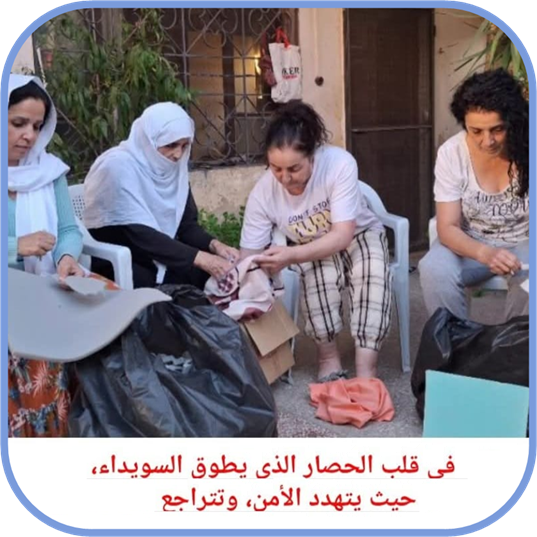
Between fear and siege, the women of Sweida have built a new life out of nothing. Some carried needles and thread to sew blankets and mattresses from scraps of old foam and fabric. Others launched charitable initiatives to collect, sort, and recycle clothing, transforming it into new warmth for bodies exhausted from abandonment. Meanwhile, others stood on the front lines, provided first aid, changed bandages using primitive tools, and transported the wounded under bombardment to the besieged national hospital.
Out of nowhere… the Needle and Thread Project emerged.In a time when children were losing their childhood and hunger was undermining the dignity of families, needles, thread, and bandages were the weapons of women against the backdrop of downfall.
Raja Arije, one of the initiators of a small-scale women’s project that emerged during the siege, says: “We are a group of women in Sweida trying to meet the needs of those who have been displaced from their villages. The number of displaced people has surpassed 170,000 and winter is coming. Families need mattresses, blankets, and pillows, but we do not have the financial means to buy them and we do not receive aid from abroad due to the siege. So we relied on recycling: we used remnants of old sponges and mattresses and distributed them to needy families.”
She added: “The women from the neighborhood came together, each helping as best they could. Some have sewing experience, others gave their time and effort. We are working with very simple tools, even our sewing machines, which we use manually because the electricity has gone out. We have made something out of nothing, simply to provide warmth to our people who have lost everything.”

 Welkom bij Zaaituin Online
 Welcome to Zaaituin Online